
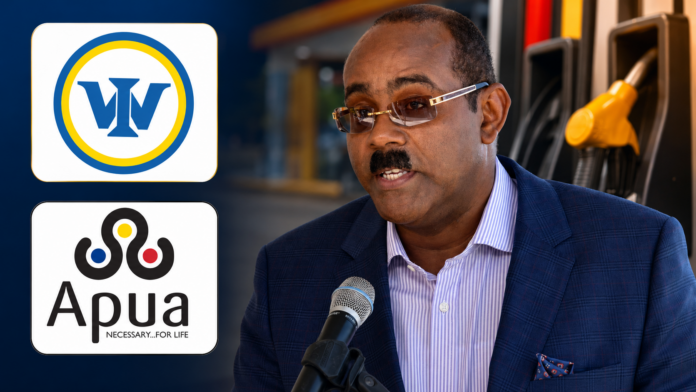

ST. JOHN’S, Antigua and Barbuda — Government spending on fuel subsidies, salary increases and payments to pensioners is expected to reduce Antigua and Barbuda’s projected primary surplus, Prime Minister Gaston Browne says.
Browne said the surplus will not be as large as initially anticipated or as strong as the figure recorded during the previous financial period.
He attributed the reduction partly to the government’s decision to subsidise petroleum prices as international oil and shipping costs increased. The policy was intended to delay or limit the impact of higher fuel prices on motorists and businesses, but it also increased government expenditure.
“I have to admit that the primary surplus that we had anticipated is not going to be as large as last year because, again, we’ve had to subsidise petroleum prices,” Browne said during his weekly radio programme.
The prime minister said the government also granted several increases and made payments to pensioners, further raising expenditure and reducing the projected surplus.
A primary surplus occurs when government revenue exceeds spending before interest payments on public debt are taken into account. It is commonly used to assess whether a government is generating enough revenue to cover its regular programmes and services.
Despite the additional spending, Browne said the government still expects to record a primary surplus.
He contrasted the expected result with what he described as persistent deficits under previous administrations and said the government continues to reduce public debt despite difficult international conditions.
Browne pointed to rising global prices and geopolitical instability as factors placing pressure on Antigua and Barbuda’s finances. As a small import-dependent country, Antigua and Barbuda is particularly exposed to increases in fuel, freight and commodity costs.
The prime minister did not disclose the revised size of the expected surplus, the total cost of the petroleum subsidies or the amount spent on the increases and pension payments.
He nevertheless described the country’s overall economic performance as positive and said the latest assessment by the International Monetary Fund showed that the government continued to perform well despite external challenges.
Browne credited workers and businesses in both the public and private sectors with contributing to the country’s economic performance.
Source: Antigua News Room Fuel Subsidies and Public-Sector Increases Expected to Reduce Government Surplus.