
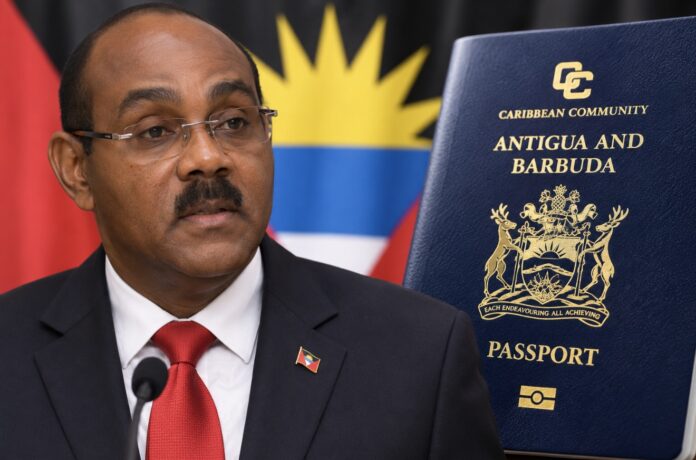

Prime Minister Gaston Browne has underscored the importance of Antigua and Barbuda’s Citizenship by Investment Programme (CIP) in financing public services and reducing pressure on taxpayers, as the country faces mounting international demands over the programme’s future.
In his address marking Antigua and Barbuda’s 45th anniversary of independence on Sunday, Browne said the programme has become a critical source of government revenue and development financing.
“Our Citizenship by Investment Programme has become an important source of public revenue and development financing. It helps to support public services, finance critical infrastructure and provide fiscal space that reduces the burden on taxpayers,” Browne said.
His remarks place renewed attention on the potential domestic financial consequences of phasing out the programme, particularly as the government seeks to maintain public services, fund development projects and protect households already struggling with the rising cost of living.
The prime minister also acknowledged the EU’s request for Antigua and Barbuda to phase out the programme by June 2028, warning that the country’s visa-free access to Europe’s Schengen Area could be affected.
However, the deadline itself is not a new development. The government disclosed the European Commission’s request in July, and Browne has since proposed a managed closure by the end of 2030, subject to negotiations over financial and technical assistance. The EU has not publicly accepted that proposal.
In Sunday’s address, Browne emphasized the need to protect the country’s economic interests while continuing diplomatic engagement.
“We must therefore be candid about what is at stake, responsible in our stewardship and innovative in determining the future of this important economic instrument,” he said.
The prime minister said the government remains willing to cooperate with international partners to address their security concerns but will also seek to protect the rights and opportunities of Antiguans and Barbudans.
“We will continue to negotiate respectfully but firmly, bringing sound judgement, diplomatic maturity and intellectual creativity to the search for mutually acceptable solutions,” Browne said.
His comments came as he acknowledged wider economic pressures facing the country, including rising food, fuel, transportation and electricity costs.
Browne said Antigua and Barbuda must strengthen its economic resilience and reduce its vulnerability to external shocks.
“We cannot afford complacency, nor can we allow these challenges to diminish our national ambition,” he said.
The government now faces the challenge of negotiating the future of a significant revenue source while seeking to preserve visa-free travel privileges and avoid additional financial burdens on citizens.
The European Commission has given Antigua and Barbuda until November 12 to communicate its position on the programme’s future.
Source: Antigua News Room PM Gaston Browne warns loss of CIP revenue could increase pressure on taxpayers.