
















































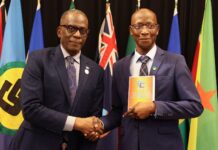


The new prices will be implemented by July 30 (Photo courtesy passportlegacy.com)
– Advertisement –
By Elesha George
Elesha.george@antiguaobserver.com
The government of Antigua and Barbuda is to introduce a new minimum threshold for its Citizenship by Investment Programme (CIP) in response to pressure from the European Union (EU).
By July 31, the new baseline fee of US$200,000 will increase contributions to the country’s National Development Fund (NDF), which is currently priced at US$100,000 – $125,000, and the University of the West Indies (UWI) Fund, which is now priced at US$150,000. This move aims to end the practice of underselling.
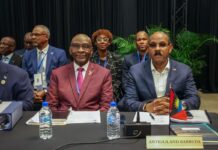
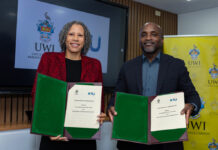
According to a press release from the Citizenship by Investment Unit (CIU) to its agents worldwide, the changes follow a Memorandum of Agreement (MOA) executed between five heads of governments of the Organisation of Eastern Caribbean States (OECS) that operate CIPs, including Antigua and Barbuda.
In a June 26 communiqué, Charmaine Donovan, the CIU’s Chief Executive Officer, disclosed that the new prices will be implemented by July 30. This date is a month later than the expected implementation date for Antigua and Barbuda, as the changes require parliamentary approval. The decision, which was unanimous, was initially expected to take effect by June 30.
Subject to parliamentary approval, the proposed amendments to the investment thresholds are as follows:
NDF – i. For a family of 1-4, the minimum investment threshold will be US$230,000; ii For a family of five or more, the minimum threshold will be US$245,000;
·UWI – The minimum threshold will be US$300,000;
·Real Estate – the minimum threshold will be US$325,000;
·Investment in Business thresholds remain as is — US$1.5 million for sole applicants and US$400,000 from a total of US$5 million in a joint venture
·Processing fees remain unchanged at US$30,000 for a single applicant up to a family of four, except for the UWI for which the processing fees are included in the investment amount. For a family of five or more, processing fees have been reduced to US$10,000 for each additional dependent.
A meeting of the signatories to the Agreement – Antigua and Barbuda, Dominica, St Kitts and Nevis, and Grenada – was held on June 19. The other islands have already implemented the changes since all that was needed was cabinet approval and gazetting.
The four islands also committed to sharing data between CIPs and enhancing programme transparency. They will share information on applicants with each other by establishing a digital portal with the Joint Regional Communications Centre (JRCC) in Barbados.
In addition, they will set common standards for agent regulation and CIP marketing, which will prohibit the use of passport photos and visa-free access in advertisements, among other things. A regional authority will be established to set standards in compliance with international requirements and best practices.
Lastly, the four Eastern Caribbean countries will strengthen post-approval screening of CIP citizens and the retrieval of cancelled passports.
For St Kitts and Nevis, the best-performing CIP country, this means a decrease in its Sustainable Island State Contributions (SISC) option. However, the change allows it to align with its Caribbean competitors.
These changes are meant to align with European Union (EU) demands to raise the minimum investment threshold. The EU has been pressuring Caribbean states to eliminate or alter their citizenship programmes. The EU has, in the past, threatened to remove visa-free travel to Europe’s Schengen Area from countries that currently have CIPs.
While Antigua and Barbuda continues to boast of having the most robust due diligence process before citizenship can be granted, there have been instances where naturalised citizens have been flagged by Interpol or arrested for involvement in multi-million-dollar schemes.
In June 2017, the Canadian government removed visa-free access for citizens of Antigua and Barbuda.