














































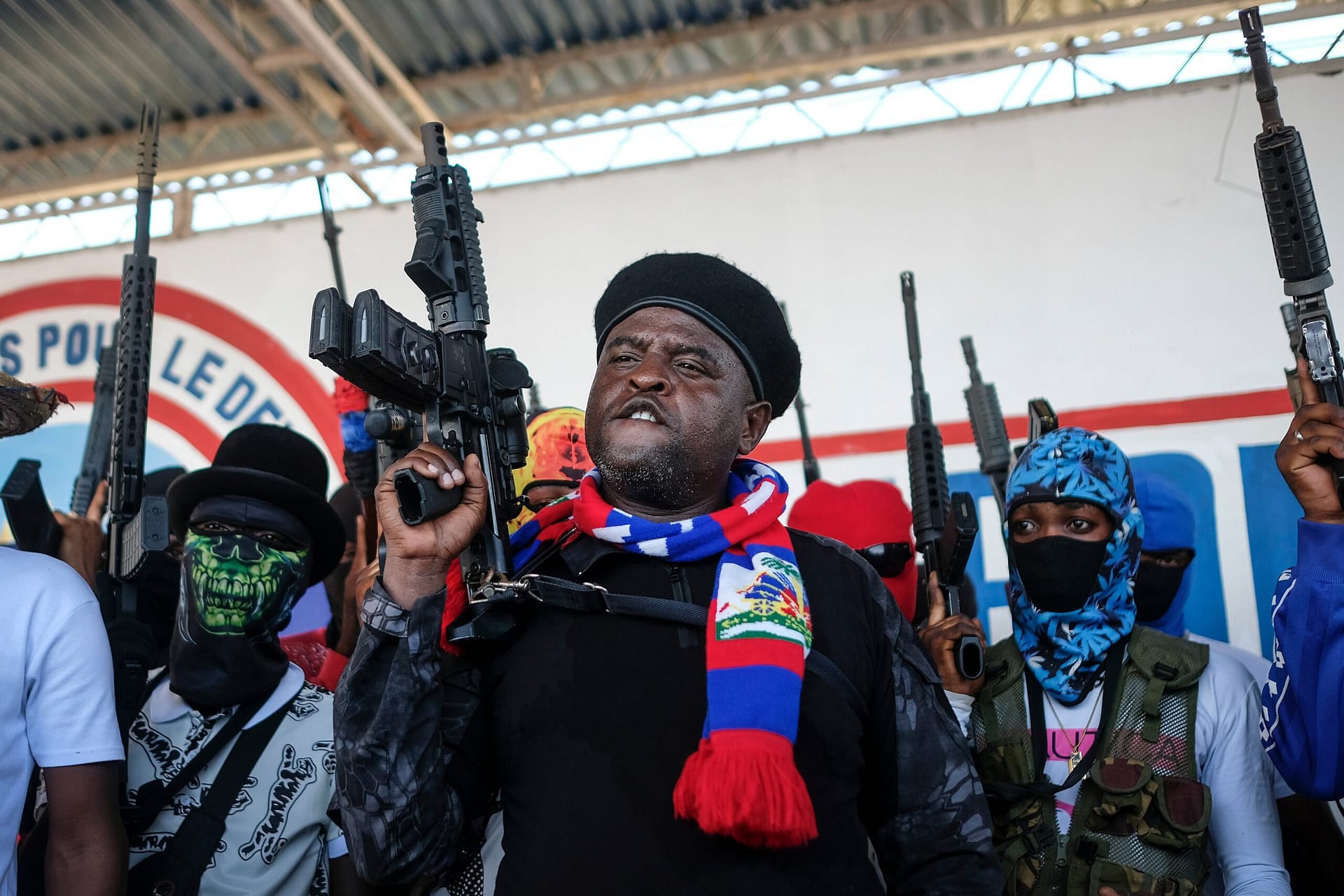
In a groundbreaking decision, Caribbean Community (CARICOM) leaders have agreed to introduce legislation that will categorise criminal gangs as terrorist organisations, marking a significant shift in the region’s approach to combating violent crime.
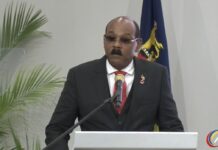
This unprecedented move, announced by Prime Minister Dr Keith Rowley of Trinidad and Tobago, aims to dismantle criminal networks and address the “unacceptably high” levels of violence plaguing the Caribbean Community.
Dr Rowley, the lead prime minister responsible for security in the CARICOM quasi-cabinet, made the announcement during a press conference late Friday at the end of the 48th CARICOM summit at the Wyndham Grand Resort – Sam Lord’s Castle.
The Trinidadian leader, whose disclosure was just one of several decisions taken following two days of intense talks, said while there is no set deadline for the proposed law to be enacted by member states, he anticipates it could be ready within months.
“There is no set deadline except that an element of urgency is asked for, and we anticipate that given the quality of legislative experience put on it, that within a matter of months, we can have something to work with. So, basically that’s what we have been able to accomplish at this stage,” he told journalists.
In his final CARICOM leaders’ meeting before stepping down later this year as prime minister before his term ends, Dr Rowley said the heads spent a lot of time on the “unacceptably high” level of violent crime and focused on the legislation, law enforcement and the public health aspects.
With respect to the legislation, we agreed that, notwithstanding social considerations . . . we agreed that the changing nature of crime is such, that acts of violence in the public space, in certain instances must now be regarded as acts of terrorism,” he revealed.
He explained that the conference identified terrorism as indiscriminate shooting in a public place where the perpetrator endangers all and sundry.
He said: “We believe that the legislation needs to be cognisant of what exactly we are experiencing now as against what the existing legislation anticipated. And to that end, heads sourced and obtained the services of a former AG (attorney general) of Belize, Godfrey Smith, who has been tasked to review our legislative templates and to come up with new legislative proposals for consideration by the Heads for changes to be made on the legislative side to treat to what we are experiencing as against what we are surprised by.
“We also expect that these acts, using the tools of trade of the criminals at large in our communities . . . that they be deemed to be acts of terrorism, and allow us to view them, not only by the executive, but by the judiciary, and allow us to fashion the appropriate legislation to that.”
Dr Rowley also announced that the Heads adopted a working definition of crime and violence as a public health issue since the effect on human conditions is such that violent crime, largely carried out by firearms, accounts for 80 per cent of the killings they are experiencing, and 90 per cent of those guns are coming from one particular source.
He said: “We agreed that this is a public health issue and will continue to engage it as such. We further agreed to appoint a high-level representative on law and criminal justice, supported by a multi-disciplinary team of technical experts, including those seconded by member-states and approved the terms of reference to design and lead the implementation of a strategic plan to improve and modernise the criminal justice delivery services across the Caribbean Community as one element of a region-wide approach.
“What this means is that we would not be struggling at the individual level as sovereign bodies, but accepting templates designed to suit our culture and experience, and using the best technical skills in law and in social services to craft legislative offering that we can all adopt very quickly.”
Prime Minister Mia Mottley, chair of CARICOM, suggested that as part of a regional approach to crime and violence and intelligence gathering, there may be a need to strengthen aspects of the Regional Security System (RSS), CARICOM’s defence pact.
“We have asked those officials responsible for IMPACS (CARICOM Implementation Agency for Crime and Security) and the Joint Regional Communications Centre as well as the Regional Security System and the individual law enforcement entities, to see how best they, too, can modify how they operate and exist,” Mottley said.
“In some instances, we may well have to consider at a functional level, we go beyond supporting each other. In the Eastern Caribbean, Barbados and Guyana, we have the benefit of the Regional Security System. There may be need to strengthen aspects of that.”