

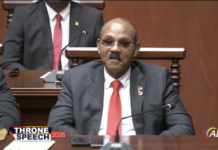














































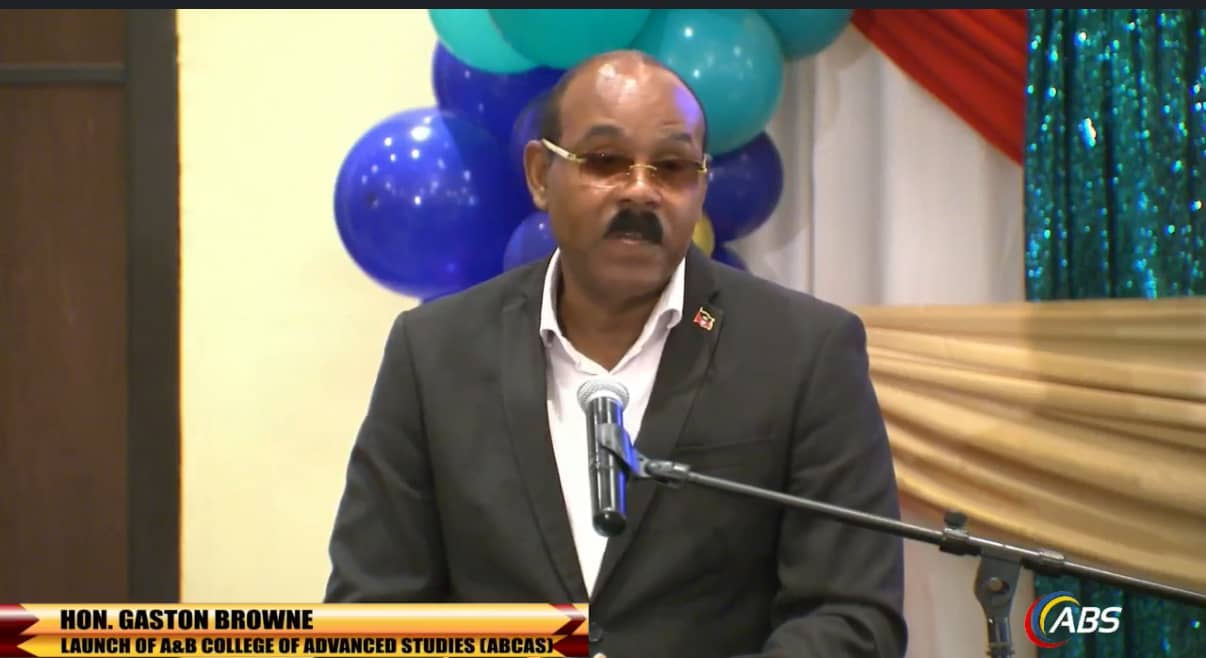
Prime Minister Gaston Browne has said Antigua and Barbuda is prepared to export skilled labour if the domestic economy cannot provide enough opportunities for its growing pool of graduates.
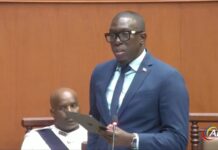
The comments came during the launch of the Antigua and Barbuda College of Advanced Studies (ABCAS), where Mr Browne outlined his government’s ambitious education agenda, including a target for half the nation to hold a degree within ten yearsAntigua & Barbuda Labour Party.
Mr Browne dismissed concerns about producing more graduates than the local market can absorb. “If it gets to the stage where we cannot provide you with opportunities locally, we’ll export labour. We’ll export skills,” he said. “I’d rather have a nation with surplus qualified persons and skilled persons than a nation of individuals who are illiterate and unskilled”Antigua & Barbuda Labour Party.
He argued that higher education levels would not only support Antigua and Barbuda’s economic growth but also enhance global competitiveness, positioning citizens for opportunities abroad if needed.
The Prime Minister’s remarks are likely to provoke debate. Critics may see the policy as an invitation to brain drain , with the country losing some of its most talented workers to larger economies.
Supporters, however, may view it as pragmatic — recognising that international labour mobility could open new channels for remittances, partnerships, and diaspora-driven investment, while ensuring graduates’ skills are not wasted.
Mr Browne framed the approach as part of a wider plan to make Antigua and Barbuda an “educational revolution”. He linked the expansion of tertiary education, second-chance programmes, and scholarships abroad to his administration’s long-term vision of transforming the country into an economic powerhouse of the Caribbean.
“Education will differentiate Antiguans and Barbudans,” he said. “We want to make sure that we become globally competitive”Antigua & Barbuda Labour Party.
The government continues to invest heavily in education, but the challenge will be ensuring that enough skilled jobs are created domestically to match the rising supply of graduates.
The balance between retaining talent at home and enabling opportunities abroad may shape Antigua and Barbuda’s workforce — and its economy — for years to come.